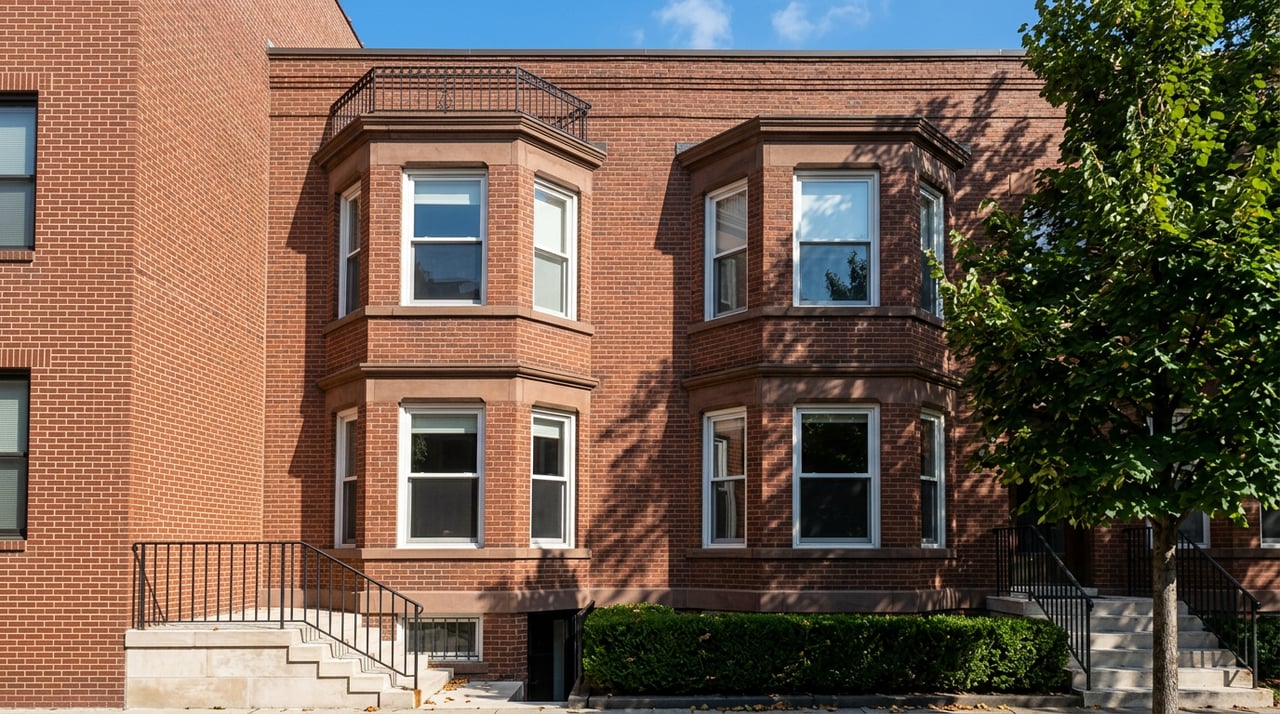
A client touring a two-family on a modest lot in Cambridgeport this spring asked her agent a version of the same question three different ways: is this street about to be torn down and rebuilt into six-story luxury rentals, or is that just noise? It's a fair question to ask before you write an offer on anything with redevelopment potential in Cambridge right now, because the honest answer depends on distinguishing what people are afraid will happen from what the city's own permit data says is actually happening, and those two stories have diverged sharply since February 2025.
That's when Cambridge Day reported that the Cambridge City Council voted 8 to 1, with only Councillor Cathie Zusy opposed, to end single- and two-family-only zoning citywide. The Cambridge Community Development Department says the Multifamily Housing Ordinance allows four-story multifamily buildings by right in every residential district except open space. Lots of at least 5,000 square feet can go to six stories if 20 percent of the residential floor area is set aside as income-restricted affordable housing. Banker & Tradesman describes the ordinance's dimensional rules as a 10-foot front setback, 5 feet on the sides and rear, and 30 percent open space. City councilors who sponsored the change noted that roughly 85 percent of Cambridge's existing housing stock didn't conform to the zoning code that preceded it.
The number that didn't hold up
A Boston Street Pulse report examined the demolition-wave claims that circulated after the vote. One widely repeated claim, attributed to a city councillor's email, put 148 projects in the pipeline and implied that many existing homes were headed for the wrecking ball. A second number fed the same fear from a different angle: 312 inquiries had come into the Cambridge Historical Commission since the ordinance passed, read by some as 312 historic homes suddenly at risk.
Councillor Marc McGovern checked both numbers against the source data. The city's Inspectional Services Department showed only 22 full demolition permits issued as of late May 2026, not 148, and several of those were unrelated to the multifamily ordinance entirely, tied instead to a separate program for fully subsidized affordable housing. The Historical Commission inquiries told a similar story once you separated a question from a permit: of the 312 inquiries, only 59 led to an actual permit. An inquiry, as McGovern pointed out, is someone asking what they'd need to do before doing something, not a demolition notice. McGovern also pushed back on the assumption that whatever does get built will be $2.5 to $3 million luxury product, noting that most projects in the pipeline hadn't been permitted yet and that most were rental housing rather than for-sale condos.
What's actually getting built, and where the real fight is now
City data presented at a joint Housing and Neighborhood and Long-Term Planning Committee meeting in late June 2026 put a number on the ordinance's first sixteen months: 41 multifamily housing projects approved since it took effect. Only 9 of those crossed the threshold that triggers mandatory inclusionary affordable units. The other 32 came in under 10,000 square feet of floor area, meaning they can be listed entirely at market rate. The city's Community Development Department is projecting roughly a tenfold increase in housing production by 2030 compared with the pace under the old zoning, though several of the city's larger developers told councilors at that same meeting they were skeptical the projection would hold.
What's notable is that the fight over the ordinance hasn't settled. That same June meeting saw CDD staff, led by Assistant City Manager for Community Development Melissa Peters, propose amendments that would increase required setbacks, add more ground-level green space, and cap average unit size at 2,000 square feet in taller buildings, in line with a concern Councillor Tim Flaherty raised about the ordinance's effect on residents' ability to put down roots, as reported by The Harvard Crimson. Around the same time, a separate citizen petition from a resident, signed by 13 others, pushed for tighter height and design standards of its own and was referred to the Ordinance Committee and Planning Board for review. Developer and attorney Patrick Barrett testified, as reported by Cambridge Day, that tightening the rules now would send projects already designed under the current envelope "back to redevelopment." Vice Mayor Burhan Azeem argued, in the debate over the citizen petition, against applying the petition's proposed restrictions to every project in the city.
Nothing has passed yet as of this writing. But the fact that the city is actively rewriting its own year-old reform is the detail a buyer evaluating a Cambridge multifamily property needs to sit with. The zoning envelope available on a given lot today isn't necessarily the envelope that will still be there when a project you're financing reaches permitting.
What your money actually buys, condo versus multifamily
The regulatory uncertainty shows up in the price data as a real spread between property types. Multifamily buildings in Cambridge have been trading at an average of roughly $587 per square foot, compared with roughly $955 per square foot for condos, based on year-to-date figures through spring 2026. Multifamily sales have also been closing closer to list price than the peak-market premiums buyers are used to, while condos are still trading at or slightly above asking in many buildings.
| Metric | Multifamily | Condo |
|---|---|---|
| Average price per square foot (YTD 2026) | ~$587 | ~$955 |
| Average sale price | ~$2.3M–$2.6M | ~$1.25M |
| Average sale-to-list ratio | ~97% | ~101% |
Local market reporting on full-year 2025 activity also flagged that the multifamily segment's median sale price rose roughly $400,000 to $2,165,000, a move attributed at least in part to the new zoning unlocking added density potential on lots that previously couldn't support it. That's the mechanism worth understanding: the price gap between a Cambridge multifamily building and a Cambridge condo isn't just a reflection of unit count. It's partly a bet on what a buyer is legally allowed to build or add to that lot, and that legal answer is currently in motion.
One number that isn't in motion, at least for now, is Cambridge's residential tax rate. At $6.67 per $1,000 of assessed value for fiscal year 2026, it remains one of the lowest in Greater Boston, sustained by a commercial tax base built on biotech campuses and office towers that Boston itself doesn't have at the same scale. On a $1.25 million property, the gap between Cambridge's rate and Boston's roughly $15,500 annual bill compounds to something like $70,000 over a 10-year hold, a detail worth factoring into any Cambridge-versus-Boston comparison a buyer is running.
What this means if you're evaluating a Cambridge property now
If you're looking at a triple-decker, a two-family, or a buildable lot with redevelopment or expansion in mind, the diligence question isn't whether the neighborhood is about to be flattened. The permit data says it isn't, at least not at the scale the loudest claims suggested. The real question is whether the specific by-right entitlement you're pricing into your offer, four stories here, six stories there with inclusionary units, will still exist under the same terms by the time you're ready to pull permits. Confirm current zoning and dimensional standards directly with the city's Community Development Department before you assume a redevelopment plan pencils out, and build in time for the fact that the rulebook itself is still being negotiated at the Council level as of this summer.
Two things the ordinance didn't touch are worth remembering as well. Historical Commission review for demolition permits and development within historic districts remains fully in force, which is exactly why only 59 of those 312 inquiries turned into actual permits. The Tree Protection Ordinance and the city's climate resilience and green building requirements are also unchanged. A lot that looks buildable under the new dimensional rules can still run into a separate layer of review if it sits in a historic district or has protected tree canopy on it.
A few questions buyers ask before they act
Do I need a special permit to build a four-story multifamily building now? Generally no. That's the core of what "by right" means under the new ordinance: no variance or special permit process for a project that fits within the standard height, setback, and open space rules. Building and fire code review still applies.
Will the rules change again? They may. As of mid-2026, the city is actively reviewing amendments to setbacks, green space requirements, and unit-size caps, alongside a separate citizen petition seeking additional design restrictions. Neither has passed as of this writing.
Does the ordinance override Historical Commission review? No. Demolition permits and development within historic districts still go through that separate process, regardless of what the base zoning allows.
If you're weighing a Cambridge multifamily purchase, a triple-decker conversion, or how a redevelopment-minded lot compares to a turnkey condo in the same price range, Frank Carroll Homes can walk through what the current entitlement on a specific address actually allows and how that stacks up against the numbers you're seeing elsewhere. Schedule a local market consultation before you assume today's zoning is the zoning you'll be building under.
This article is general information, not legal, tax or financial advice. Consult a qualified professional about your situation.