Thinking about life in Boston’s Seaport District? You are not alone. This waterfront area has become one of the city’s most talked-about places to live, with sleek condo towers, public waterfront paths, cultural destinations, and a fast-growing residential scene. If you are weighing a move here, this guide will help you understand what Seaport living really feels like, how the housing stock varies, and what to expect from day-to-day life. Let’s dive in.
What defines Seaport District living
Seaport District sits on the South Boston waterfront, just southeast of Downtown across Fort Point Channel. According to Boston planning materials, it has transformed from a warehouse and industrial area into a creative, tech, and residential hub with a strong mixed-use identity.
That history helps explain why Seaport feels different from many older Boston neighborhoods. Much of the land was filled in during the 19th century, and the district has developed with a newer, more planned look and feel than areas known for brownstones, rowhouses, and older street patterns.
Why Seaport feels newer than Boston
Boston’s long-term planning for the South Boston Waterfront envisioned an accessible waterfront with active civic uses, new housing, and a 24-hour neighborhood. You can still see that vision today in the district’s broad streets, newer residential buildings, and the way public space is built into the neighborhood experience.
Compared with more traditional Boston neighborhoods, Seaport often feels more master-planned and amenity-driven. The lifestyle here tends to center on waterfront walks, building amenities, destination dining, and convenient transit connections rather than a block-by-block rhythm of older residential streets.
Harborwalk shapes daily life
One of Seaport’s biggest lifestyle advantages is the waterfront itself. Boston planning documents describe Harborwalk as a continuous public walkway along the shoreline, connecting the district to Boston’s broader 45-mile waterfront path network.
For many residents, that means the water is not just a view. It is part of everyday life. You can step outside for a walk along the piers, take in open harbor views, or use the waterfront as part of your routine before or after work.
Parks and open space nearby
Public space is a major part of Seaport’s appeal. Martin’s Park, next to the Boston Children’s Museum on Sleeper Street, adds a climate-resilient park and play space to the neighborhood’s mix of waterfront destinations.
Boston’s coastal-resilience planning also makes clear that waterfront access and flood adaptation are both central to the area’s future. In practical terms, the city is planning features such as raised Harborwalk sections and other flood-mitigation strategies as the neighborhood continues to evolve.
Culture within walking distance
Seaport also offers easy access to several well-known cultural destinations. Boston planning materials point to the Boston Children’s Museum, the Institute of Contemporary Art, and the Bank of America Pavilion as nearby anchors that help define the neighborhood.
That mix gives the district a live-work-play feel. You are not just choosing a home here. You are choosing access to waterfront paths, arts and entertainment, and public spaces that are woven into the neighborhood.
Dining and nightlife set the pace
Seaport is one of Boston’s most destination-oriented dining areas. Current neighborhood guides highlight a mix of seafood restaurants, steakhouses, raw bars, tapas spots, and hotel lounges, along with live music venues nearby.
That shapes the mood of the neighborhood. Seaport often has an active after-work and weekend energy, especially around the waterfront and entertainment venues. If you enjoy going out for dinner, drinks, or a show within walking distance, that may be a major plus.
For some buyers, this energy is exactly the draw. For others, it is important to understand that Seaport does not read as a quiet, purely residential neighborhood in the same way some other Boston areas do.
Fort Point adds character and contrast
Within the broader Seaport area, Fort Point brings a different texture. Boston describes the Fort Point Channel Landmark District as the city’s largest and most cohesive collection of late-19th- and early-20th-century industrial loft buildings.
The area is also known for its arts presence. Boston’s arts office says Fort Point grew from vacant brick-and-beam warehouses into the largest community of artists in New England.
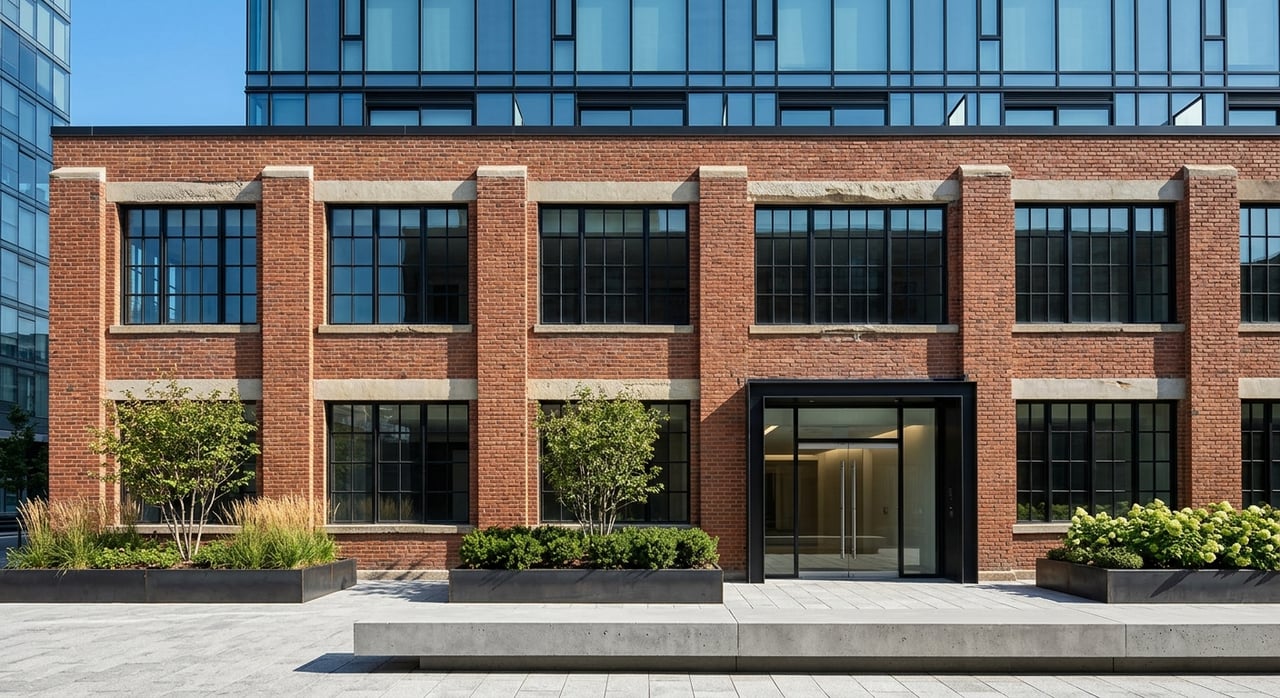
This contrast is part of what makes the district interesting. In one part of Seaport, you may see polished glass towers and newer streetscapes. A short walk away in Fort Point, you find older loft-style buildings and a more industrial, adaptive-reuse setting.
Seaport housing: towers and lofts
Housing in Seaport generally falls into two broad categories: newer luxury towers and more character-driven loft or conversion properties. Your choice often comes down to whether you want a full-service building experience, a more distinctive architectural feel, or some balance of both.
Luxury towers and full-service amenities
The luxury-tower side of Seaport is defined by modern design, larger views, and extensive amenity packages. Projects such as Echelon Seaport show what this part of the market can look like, with hundreds of condominium and apartment units across high-rise towers, plus a public plaza, retail, 24-hour concierge, valet service, indoor and outdoor pools, a fitness center, a resident sky lounge, and outdoor terraces.
100 Pier 4 reflects a similar high-end approach, with features such as harbor views, an elevated and resilient building design, a rooftop pool, fire-pit dining, lounges, a screening room, and parking. In this segment, convenience and building services are a major part of the value proposition.
Lofts and adaptive reuse in Fort Point
The loft side of the market offers a different kind of appeal. Fort Point study materials describe these buildings as former warehousing and light manufacturing structures with high ceilings, freight elevators, weight-bearing floors, and large windows.
That industrial framework creates homes with more texture and architectural personality. It is also still an active part of the neighborhood’s evolution, as shown by the planned 145-unit residential conversion at 320 Summer Street.
What Seaport homes cost
Seaport remains one of Boston’s most expensive housing markets. Redfin’s March 2026 snapshot shows a median sale price of $2.98 million and $1,940 per square foot in Seaport District, compared with $860,000 for Boston overall.
The same snapshot showed 93 median days on market and 10 sales that month. Because transaction volume is relatively small, it is important to remember that a handful of high-end sales can shift the median quickly.
What drives pricing in Seaport
Several factors tend to shape pricing in this neighborhood. Based on the district’s housing patterns and how major buildings are positioned, common value drivers likely include:
- Harbor or park views
- Higher floor levels
- Private outdoor space
- Garage parking
- Depth of amenities
- Building reputation
- Proximity to Harborwalk
- Access to transit
Climate resilience also matters in this location. Because much of the South Boston waterfront sits on filled land and the city is planning flood-mitigation improvements, buyers often pay close attention to building design, elevation, and resilience planning.
Growth is still part of the story
Seaport may feel established in many ways, but it is still evolving. Boston planning data says housing units in the South Boston Waterfront grew 327% from 2010 to 2020.
That growth helps explain why the neighborhood can feel both polished and in transition at the same time. New development, office-to-residential conversion efforts, and public-realm improvements continue to shape what living here looks like.
Getting around from Seaport
Transit and access are a real part of the neighborhood’s appeal. The Silver Line connects Downtown and South Station with the Seaport, and Boston’s transportation department is also working on multimodal links between North Station, South Station, and the Seaport.
The city also recently opened a commuter ferry stop at Pier 10, linking South Boston Waterfront, Fan Pier, and North Station. If you value multiple ways to move around the city, that expanding mix of transit options can be a meaningful advantage.
Is Seaport the right fit for you?
Seaport can be a strong fit if you want a modern home, a waterfront setting, and a lifestyle built around convenience, amenities, dining, and access to culture. It can also appeal to relocation buyers who want a more turnkey, full-service living experience in Boston.
At the same time, your best fit depends on what matters most to you. If you are drawn to older architecture, a more traditional residential pattern, or a quieter street-level rhythm, you may want to compare Seaport with other Boston neighborhoods before making a decision.
The key is to look beyond the skyline and ask how you want your day-to-day life to feel. In Seaport, that often means balancing luxury, location, waterfront access, and a distinctly modern version of Boston living.
If you are exploring Seaport District condos, comparing Boston neighborhoods, or planning a move to the waterfront, Frank Carroll can help you evaluate your options with clear, local guidance and a high-touch approach tailored to your goals.
FAQs
What is the Seaport District in Boston known for?
- The Seaport District is known for its waterfront setting, modern luxury towers, Harborwalk access, destination dining, cultural venues, and fast growth as a mixed-use residential area.
What types of homes are common in Seaport District?
- Seaport housing is commonly a mix of luxury high-rise condos with full-service amenities and loft-style or adaptive-reuse buildings, especially around Fort Point.
How expensive are homes in Seaport District Boston?
- Based on a March 2026 market snapshot, the Seaport District median sale price was $2.98 million, with a median of $1,940 per square foot.
How do you get around from Seaport District?
- Seaport is served by the Silver Line, waterfront walking routes like Harborwalk, and a commuter ferry stop at Pier 10 that links South Boston Waterfront, Fan Pier, and North Station.
How is Seaport different from older Boston neighborhoods?
- Seaport generally feels newer, more planned, more amenity-focused, and more waterfront-destination oriented than many of Boston’s older neighborhoods.
Is Fort Point part of the Seaport District lifestyle?
- Fort Point adds an older industrial loft character and arts presence to the broader Seaport area, creating a contrast with the newer glass towers and waterfront development nearby.